Column · @getnightmaremodealienzone
Why Nightmare Mode Alien Isolation Is the True Survival Horror Test
I have played through Alien Isolation more times than I care to count. Each run taught me something new about the game's systems, its rhythm, and its capacity to terrify. But nothing prepared me for what Nightmare difficulty does to the experience. When I first loaded into the Sevastopol Space Station on Nightmare mode, I expected a tougher version of the same game. What I got was something else entirely: a survival horror simulation that strips away every safety net and forces you to think like a real person trapped in a nightmare.
The Difficulty That Rewires the Game
Creative Assembly built Alien Isolation around a simple but elegant idea: the Xenomorph is not scripted. It hunts you with an Alien AI that learns from your behavior and adapts in real time. On lower difficulties, that AI still works, but it gives you enough breathing room to recover from mistakes. You can peek around corners, test the Motion Tracker, and plan your next move without immediate punishment. Nightmare mode changes that completely. The Xenomorph becomes relentless. It drops from vents mid-sprint, doubles back when you think you have lost it, and punishes hesitation with instant death.
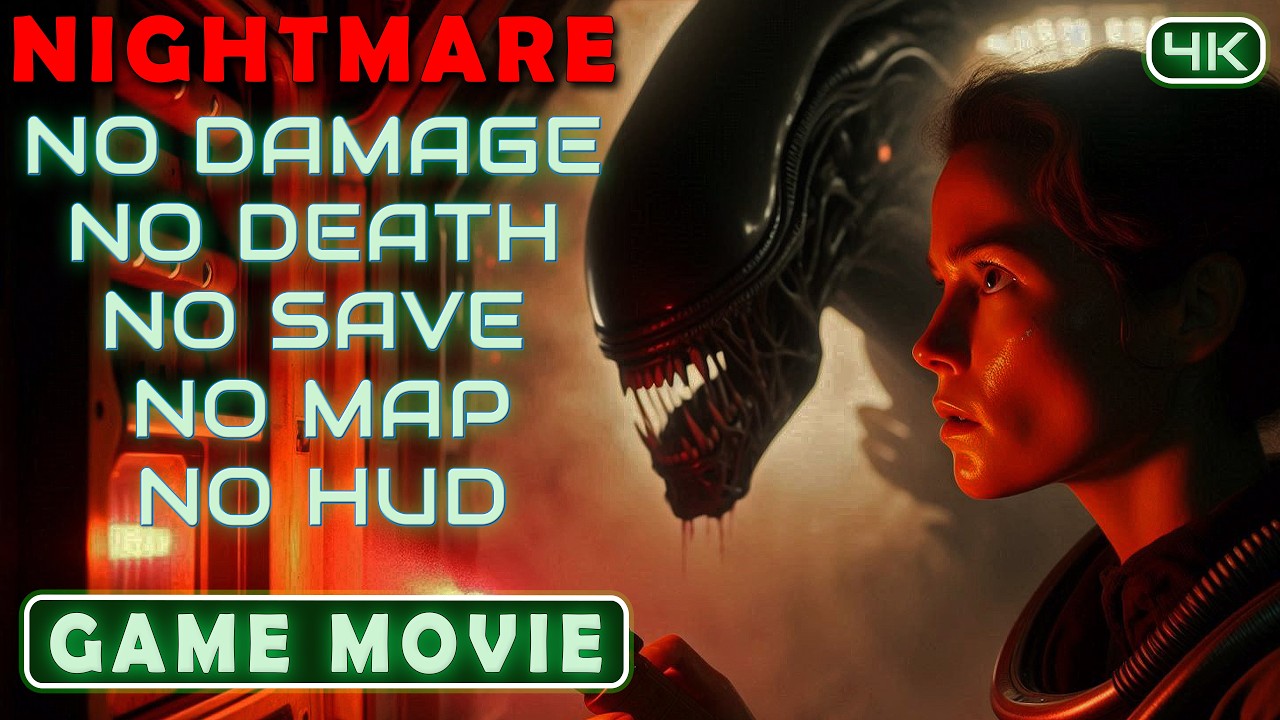
What makes Nightmare Mode different is not just the damage numbers. The entire game loop shifts. Save Rooms become scarce, and the ones that remain do not always work. You learn to treat every door, every locker, every shadow as a potential death trap. The Motion Tracker, which feels like a lifeline on Normal difficulty, becomes almost useless on Nightmare. The Xenomorph moves too fast and too unpredictably for the tracker to give you reliable intel. You rely on sound, on instinct, on the subtle cues that the developers hid in the environment.
This is where the true survival horror emerges. You are not fighting the Alien. You are fighting yourself. The urge to sprint, to check the tracker one more time, to hide in a locker that might not be safe. Nightmare mode forces you to unlearn every habit you built on easier settings. It demands patience, memory, and a willingness to fail.
Amanda Ripley and the Weight of a Name
The story of Alien Isolation follows Amanda Ripley, daughter of Ellen Ripley, as she searches for the flight recorder from the Nostromo. That connection matters more on Nightmare mode. When you play as Amanda, you carry the weight of her mother's legacy. The game does not let you forget it. The Xenomorph is a direct link to the creature that destroyed Ellen's crew, and every encounter feels personal.
On Nightmare difficulty, that personal stake amplifies. You spend hours creeping through the Medical Bay, the San Cristobal Medical Facility, and the darkened corridors of Sevastopol. Each area tells a story of panic and failure. The Working Joes, those unsettling androids, become more aggressive on Nightmare. They do not just patrol; they hunt. Their synthetic voices echo through empty halls, and their movements feel more deliberate. You learn to respect them as much as you respect the Alien itself.
Amanda is not a soldier. She is an engineer, a survivor by wits rather than firepower. Nightmare mode honors that. The game gives you tools like the Flame Trap and the Molotov Cocktail, but they are not solutions. They are delays. A well-placed Flame Trap can buy you five seconds. A Molotov might force the Xenomorph to retreat for a moment, but it will come back angrier. On Nightmare, every resource feels precious. You hoard materials, choose your crafting carefully, and never waste a single item.
The Rhythm of Fear and Failure
One of the most misunderstood aspects of Alien Isolation is its stealth mechanics. This is not a game where you can hide indefinitely. The Alien AI learns your favorite spots. If you spend too long inside a locker, it will wait outside. If you rely on the same vent route twice, it will cut you off. Nightmare mode sharpens this system to a razor edge. The Alien does not just learn; it anticipates.
I remember a specific run through the Medical Bay where the Xenomorph killed me seven times in a row. Each death taught me something. The first time, I moved too fast. The second, I hid too long. The third, I used the Motion Tracker at the wrong moment and gave away my position. By the seventh death, I had mapped the patrol patterns, memorized the location of every Save Room, and understood when to sprint and when to crawl. That is the rhythm of Nightmare mode. It is brutal, but it is fair. Every failure is a lesson.
The game does not hold your hand. There are no Checkpoint saves between areas. If you die, you go back to your last manual save, which might be thirty minutes behind. This is not a bug. It is a design choice that forces you to treat every encounter with the seriousness it deserves. You cannot brute-force your way through Nightmare mode. You have to learn the language of the game.
The Tools That Define Your Strategy
Alien Isolation gives you a toolkit that feels generous on Normal difficulty but razor-thin on Nightmare. The rev3, the game's iconic revolver, is almost useless against the Xenomorph. It can stun a Working Joe for a moment, but it attracts attention. The Flame Trap can block a corridor, but it takes time to set up and makes noise. The Molotov Cocktail is your best bet for driving the Alien away, but it consumes rare resources.
On Nightmare, you learn to use these tools sparingly. You craft a Molotov only when you are sure you need it. You place a Flame Trap not to kill, but to redirect. You use the rev3 only as a last resort. The HUD, which on lower difficulties gives you a clear readout of your health and equipment, becomes a minimal presence. You rely on visual cues: the flicker of a light, the drip of condensation, the sound of your own breathing.
This minimalism is what makes Nightmare mode so immersive. The game strips away the interface and leaves you with nothing but the environment. You feel every step. You hear every creak. You see every shadow and wonder if it is moving.
Why You Should Try Nightmare Mode Alien Isolation
I do not recommend Nightmare mode for everyone. It is punishing. It will test your patience, your memory, and your ability to stay calm under pressure. But if you love survival horror, if you want to experience Alien Isolation the way Creative Assembly intended it to be felt, then you owe it to yourself to try. The phrase "nightmare mode alien isolation" might sound like an exaggeration, but it is not. It is an accurate description of the experience.
The game becomes a different beast. The Sevastopol Space Station feels larger and more hostile. The Xenomorph feels smarter and more dangerous. The Working Joes feel like genuine threats rather than minor inconveniences. And you, as Amanda Ripley, feel small. That is the point. Survival horror works best when you are not powerful. When every door could be your last. When the only thing between you and the Alien is your own skill and your own nerve.
I have spent hundreds of hours in this game. I have memorized the layout of every area, the trigger for every scripted event, the behavior of every enemy. And still, Nightmare mode surprises me. It reminds me that no matter how well I know the game, the Alien is always faster, always smarter, always one step ahead.
That is the beauty of survival horror. It is not about winning. It is about surviving. And on Nightmare mode, every second of survival feels earned.